


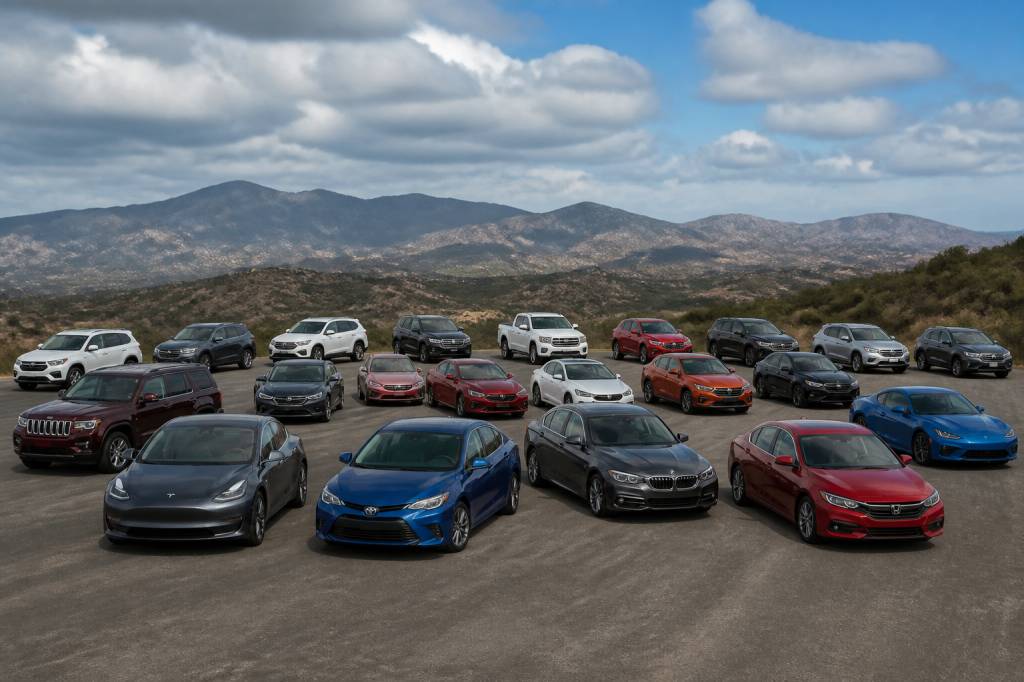
Car names do more than fill a registration document. They signal heritage, body style, market position, and sometimes a manufacturer’s sense of humour. A “Mustang” sounds fast before you even see one. A “Prius” sounds efficient, which is exactly the point. And a “Defender”? That name does a lot of heavy lifting without saying much at all.
If you’re browsing the used market, comparing finance options, or simply trying to make sense of the endless badges on the road, it helps to know the names behind the metal. Some are legends, some are best-sellers, and some are the sort of cars that quietly do 200,000 miles without ever making a fuss. Here’s a practical guide to 100 car names worth knowing.
Why car names matter
Manufacturers don’t pick names at random. A name can tell you whether a car is aimed at commuters, families, enthusiasts, or luxury buyers. It can hint at a car’s size, fuel type, or image. Even better, it can help you spot where a model sits in a brand’s range.
That matters when you’re shopping. A “Golf” and a “Passat” may both be Volkswagens, but they’re not playing the same game. The same goes for a “Civic” versus a “CR-V,” or a “3 Series” versus an “X5.” Knowing the names saves time, avoids confusion, and makes car conversations slightly less awkward.
100 car names you should know
Here’s a clean list of popular models and brands across hatchbacks, SUVs, saloons, sports cars, pickups, and electric vehicles.
- Ford Mustang
- Chevrolet Corvette
- Toyota Corolla
- Honda Civic
- Volkswagen Golf
- BMW 3 Series
- Mercedes-Benz C-Class
- Audi A4
- Nissan Qashqai
- Hyundai Tucson
- Kia Sportage
- Mazda MX-5
- Tesla Model 3
- Porsche 911
- Land Rover Defender
- Jeep Wrangler
- Subaru Outback
- Volvo XC60
- Skoda Octavia
- Renault Clio
- Peugeot 208
- Citroën C3
- Fiat 500
- Mini Cooper
- Lexus RX
- Acura MDX
- Genesis G80
- Dacia Duster
- SEAT Ibiza
- Cupra Formentor
- Alfa Romeo Giulia
- Maserati Ghibli
- Ferrari 488
- Lamborghini Huracán
- McLaren 720S
- Bentley Continental GT
- Rolls-Royce Phantom
- Aston Martin DB11
- Bugatti Chiron
- Toyota Land Cruiser
- Honda CR-V
- Ford F-150
- Chevrolet Silverado
- Ram 1500
- GMC Sierra
- Toyota Tacoma
- Nissan Navara
- Isuzu D-Max
- Mitsubishi L200
- Mazda CX-5
- Kia EV6
- Hyundai Ioniq 5
- Volkswagen ID.4
- BMW i4
- Mercedes-Benz EQC
- Audi Q8 e-tron
- Polestar 2
- Lucid Air
- Rivian R1T
- Ford Mustang Mach-E
- Chevrolet Bolt
- Nissan Leaf
- Renault Zoe
- Smart Fortwo
- Toyota Prius
- Honda Accord
- Toyota Camry
- Subaru Impreza
- Mitsubishi Outlander
- Ford Focus
- Opel Corsa
- Vauxhall Astra
- Suzuki Swift
- Toyota Yaris
- Honda Fit
- Kia Rio
- Hyundai Elantra
- Mazda 3
- Volkswagen Passat
- BMW 5 Series
- Mercedes-Benz E-Class
- Audi A6
- Jaguar XE
- Lexus ES
- Cadillac Escalade
- Lincoln Navigator
- Range Rover
- Discovery Sport
- Porsche Cayenne
- Bentley Bentayga
- Maserati Levante
- Volvo S90
- Skoda Superb
- Peugeot 3008
- Renault Captur
- DS 7
- Fiat Panda
- Nissan Juke
- Toyota GR Yaris
- Caterham Seven
What these names tell you at a glance
Some naming systems are straightforward. BMW’s “3 Series” and “5 Series” are easy to place: one is smaller and more compact, the other more executive. Mercedes-Benz follows a similar logic with A-Class, C-Class, and E-Class. Audi’s alphabet-soup approach is less poetic, but just as useful once you get used to it.
Other names are pure brand-building. The Mustang is instantly recognisable, and the same goes for the Corvette, Wrangler, or Defender. These names are less about taxonomy and more about identity. They carry history. They create expectation. They sell the dream before the test drive starts.
And then there are the cars that sound as if they were named in a boardroom after too much coffee: EV6, ID.4, EQC, Q8 e-tron. Practical? Yes. Memorable? Less so. But they do make life easier when a company wants to slot several electrified models into a clear lineup.
Popular names by body style
If you’re trying to identify what kind of car a model is likely to be, the name often gives you clues. “MX-5” is a tiny sports car. “Qashqai” is an SUV. “R1T” is a pickup truck with an electric twist. “Corolla” has long been associated with sensible family motoring.
Here’s the quick cheat sheet:
- Hatchbacks and small cars: Golf, Clio, Yaris, Fiesta, Corsa
- Family cars and saloons: Octavia, Passat, Camry, Accord, 5 Series
- SUVs and crossovers: Qashqai, Tucson, Sportage, CR-V, XC60
- Pickups: F-150, Silverado, Ranger, Navara, D-Max
- Sports cars: Mustang, 911, Corvette, MX-5, Huracán
- Electric cars: Model 3, Ioniq 5, EV6, ID.4, Leaf
That said, naming conventions are not always tidy. A car with a “sporty” name may still be designed for comfort, while a humble-looking model can hide serious performance. The badge gives a clue, not a verdict.
Brands that dominate the road
Some marques appear again and again because they’ve earned trust over decades. Toyota, Honda, Volkswagen, Ford, BMW, Mercedes-Benz, and Audi all have broad appeal for different reasons. Toyota leans on reliability. BMW leans on driving feel. Ford has built a reputation on accessible, versatile models. Volkswagen sits neatly in the middle for many buyers who want familiarity without fuss.
Then there are the premium and luxury names. Porsche, Bentley, Rolls-Royce, Aston Martin, Ferrari, Lamborghini, and McLaren aren’t just car makers; they are symbols. They’re also reminders that automotive naming is part engineering, part marketing, and part theatre. Nobody buys a Phantom because the name is subtle.
Names that became icons
Some models have done more than survive; they’ve shaped the market. The Corolla became a byword for dependable transport. The Civic helped define the compact car segment. The Golf set the benchmark for the hatchback class. The Defender and Wrangler became shorthand for rugged off-road capability. The 911 has spent decades proving that evolution, when done properly, can be a very profitable habit.
What’s interesting is how these names endure even as the cars change. A modern Civic has little in common with early versions beyond the badge and the idea. The same is true of the Golf, which has grown up from basic hatchback to highly polished all-rounder. The name survives because the reputation survives.
Electric names and the new era
Electric cars have introduced a different naming style. Many brands now use alphanumeric systems, partly because they’re clean, scalable, and easy to extend. That explains names like Model 3, EV6, ID.4, i4, EQC, and Q8 e-tron. It’s not glamorous, but it works.
Still, some manufacturers are trying to preserve personality. The Mustang Mach-E borrows the Mustang name to signal performance and familiarity, even though it’s a very different machine. The Ioniq 5 and EV6 sound modern without being cold. The Polestar 2 and Lucid Air aim for a premium, tech-led impression. In other words, the naming game hasn’t stopped; it has just moved with the battery pack.
How to remember car names without losing your mind
If you’re not a car obsessive, the number of models can feel ridiculous. A simple method helps: group cars by brand, then by size or purpose. Once you know a Honda Civic is a compact car and a CR-V is a crossover, the rest becomes easier. Do the same with BMW, Audi, Mercedes-Benz, or Volkswagen, and you’ll start spotting patterns quickly.
And yes, some names will always stick in your head more than others. “Wrangler” sounds ready for anything. “Panda” sounds charmingly small. “Chiron” sounds expensive because, well, it is. Naming matters because cars are emotional purchases as much as practical ones.
What to look for when a car name comes up in conversation
If someone mentions a model and you want to know whether it suits your needs, ask three questions: what size is it, what’s it for, and where does it sit in the range? That usually tells you enough to compare costs, practicality, and running expenses.
For example, a Toyota Yaris and a Toyota Camry serve very different buyers. A Porsche Cayenne is not a 911 with extra boot space. A Ford F-150 and a Ford Focus occupy different universes, despite sharing a badge. Once you separate the name from the marketing gloss, the car’s role becomes much clearer.
That’s the real value of knowing car names: it lets you read the road faster. And in a market where there’s always another trim level, another badge, and another “special edition” waiting to confuse you, that’s no small advantage.