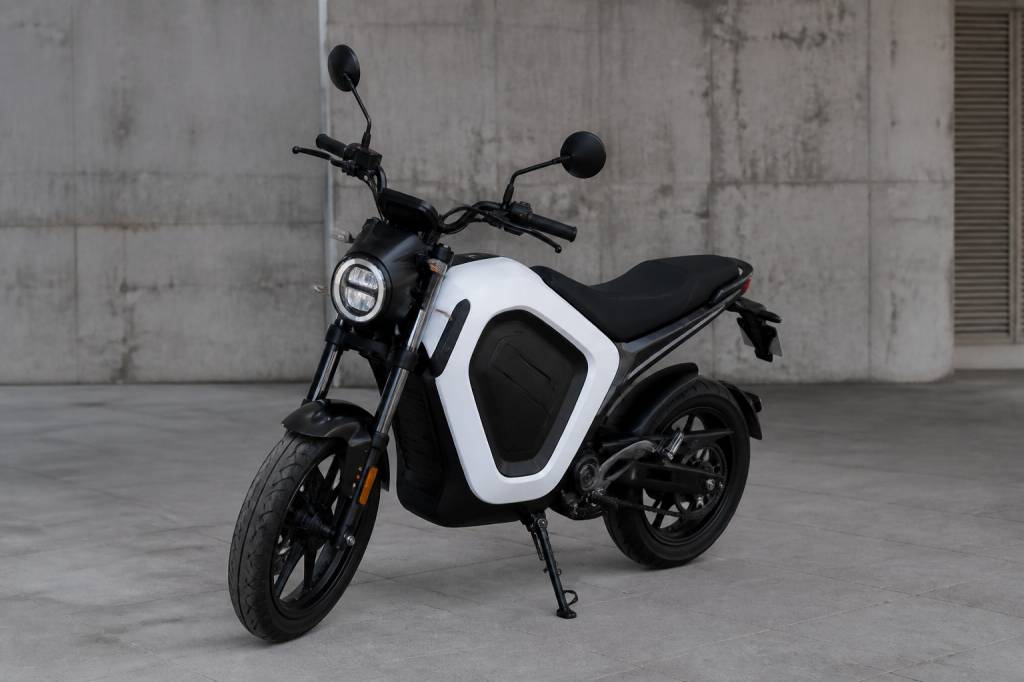
The 100 Strom is an electric two-wheeler aimed at riders who want straightforward urban transport without the running costs associated with a petrol motorcycle. Compact, quiet and designed around everyday usability, it sits in the increasingly competitive space between a conventional scooter, a lightweight motorcycle and a practical commuter vehicle.
That positioning matters. Not every rider needs superbike performance or long-distance touring ability. For commuting, local errands and short urban journeys, a manageable electric bike can make more sense than a larger, heavier machine. The real question is whether the 100 Strom offers enough range, performance and equipment to justify its price.
Here is a detailed look at its features, road manners, ownership costs and the finance routes worth considering in the UK.
What is the 100 Strom?
The 100 Strom is built around a simple idea: deliver accessible electric mobility with the familiar proportions and controls of a small motorcycle. Its electric drivetrain removes the need for a clutch, gear changes and regular petrol-station visits, while the compact dimensions make it well suited to congested streets.
That simplicity is one of its strongest selling points. Twist the throttle, manage the brakes and concentrate on the road. There is no engine vibration at idle, no exhaust note and no waiting for a small petrol engine to warm up on a cold morning.
As with many electric motorcycles, exact specifications can vary between markets, production batches and dealer configurations. Battery capacity, charging equipment, software settings and homologation requirements should therefore be checked carefully before signing an order. A responsible test drive and a written specification sheet are more useful than relying on a headline figure alone.
Design and everyday practicality
The 100 Strom has the compact footprint expected of an urban-focused motorcycle. That makes it easier to filter through slow traffic, park in tight spaces and manoeuvre at low speed. Newer riders will also appreciate the relatively unintimidating proportions compared with a full-size petrol motorcycle.
Electric motorcycles tend to look cleaner and more minimalist than their combustion-powered counterparts. The 100 Strom follows that formula, with a design focused less on engine hardware and more on the battery, frame and rider interface. Whether that styling appeals will depend on personal taste, but its appearance should not be mistaken for a lack of practicality.
For daily use, examine the details that brochures often overlook. Is there enough room for a lock? Can a top box or panniers be fitted? Does the seat accommodate two adults comfortably? Where is the charging port located, and can the bike be plugged in without removing the battery?
These questions become particularly important for commuters. A motorcycle that looks excellent outside a showroom may be less convenient if charging requires a complicated routine every evening.
Features and equipment
The feature list is likely to be one of the 100 Strom’s most attractive aspects. Electric two-wheelers generally offer useful standard equipment because many of the functions are controlled electronically rather than mechanically.
-
Electric power delivery: immediate torque provides smooth acceleration away from traffic lights and junctions.
-
Digital instrumentation: the display should provide key information such as speed, battery state, riding mode and estimated remaining range.
-
Low-speed simplicity: the automatic drivetrain removes the need for a clutch and manual gear selection.
-
Regenerative braking: where fitted, energy can be recovered during deceleration, although it should not be confused with a replacement for conventional brakes.
-
LED lighting: efficient lighting improves visibility while placing less demand on the electrical system.
-
Multiple riding modes: an economy or low-power setting can help maximise range, while a stronger mode makes joining faster traffic easier.
-
USB or accessory charging: useful for keeping a phone powered during a working day or longer trip.
Connectivity may also be available, depending on the model specification. Smartphone applications can provide battery information, location data, riding statistics or service reminders. These features sound impressive, but they should be treated as useful additions rather than the reason to buy the bike. A reliable charging system, predictable range and strong dealer support matter more than an attractive app.
Performance on the road
The 100 Strom’s strongest performance characteristic is likely to be its response at low and medium speeds. Electric motors produce torque immediately, so the bike can feel lively when pulling away from a junction. In town, this can make it feel more energetic than a small petrol motorcycle with a modest engine.
There is also a refinement advantage. The absence of engine noise makes urban riding calmer, although it means riders must be even more aware of pedestrians and cyclists who may not hear the bike approaching. Smooth acceleration is welcome, but it should never replace defensive riding.
Where expectations need to be managed is at higher speeds. A compact electric motorcycle designed primarily for urban use may be perfectly comfortable on city roads and suburban routes but less convincing on motorways or long stretches of fast dual carriageway. Wind resistance increases quickly, battery consumption rises and the available performance reserve becomes more important.
This is not necessarily a criticism. Choosing the right tool for the journey is the key. If the typical commute involves 15 miles of urban and suburban riding, the 100 Strom may be well matched to the task. If the same commute includes sustained motorway speeds in poor weather, a larger motorcycle with a bigger battery and stronger weather protection may be the wiser option.
Range, charging and battery life
Range is the subject buyers should investigate most carefully. Manufacturers normally quote a test-cycle figure, but real-world results depend on speed, temperature, rider weight, gradients, tyre pressures and the use of lights or accessories.
Cold weather can be particularly demanding for electric vehicles. Battery performance may fall, and riders often use heated clothing or other equipment that increases electrical consumption. A sensible approach is to treat the official range as a best-case reference rather than a guaranteed daily distance.
For example, a rider with a 25-mile round trip should not choose a bike whose laboratory range is only slightly above that figure. A comfortable buffer is essential. It allows for detours, traffic, cold conditions and the gradual reduction in battery capacity that occurs over time.
Charging at home is usually the most convenient arrangement. Plugging in overnight means the bike can begin each morning ready for use, much like charging an electric car. Public charging can be useful, but motorcycles do not always have the same access to charging bays or cable storage as cars. Carrying a charging lead may also be less convenient than it is in a car boot.
Before buying, check the following:
-
How long does a full charge take from a standard domestic socket?
-
Is the battery removable, and how heavy is it?
-
Is a fast charger available or included?
-
What warranty applies to the battery?
-
Does the warranty specify a minimum retained capacity?
-
What happens if the battery needs replacing outside the warranty period?
The battery is usually the most expensive single component, so its warranty deserves as much attention as the headline purchase price.
Ride comfort, braking and handling
A small electric motorcycle should feel approachable at low speed and stable when moving through traffic. The 100 Strom’s compact layout should help with manoeuvrability, while the low-mounted battery may contribute to a lower centre of gravity than some petrol alternatives.
That can make the bike feel planted through bends. However, the battery also adds weight, and riders should test how easily the bike can be moved by hand, parked on a slope or placed on its stand. A motorcycle may feel light on the road but surprisingly substantial in a cramped garage.
Braking performance is just as important as acceleration. Look for confident lever feel, predictable modulation and an anti-lock braking system where available. ABS is particularly valuable on wet or slippery UK roads, where a sudden stop can quickly become a loss of control without adequate electronic assistance.
Seat comfort and suspension quality will determine whether the bike remains enjoyable after the first few miles. A firm seat may be acceptable for a short commute but tiring on longer journeys. Take a meaningful test ride rather than simply sitting on the motorcycle outside the dealership.
Running costs and ownership
Electric motorcycles generally have fewer moving parts than petrol bikes. There is no engine oil, spark plug, exhaust system or conventional clutch to maintain. Servicing can therefore be simpler, although it is not maintenance-free.
Owners still need to monitor tyres, brakes, suspension, steering bearings, lights and general fastener condition. Battery and motor diagnostics may also require specialist equipment. The availability of trained technicians is important, particularly if the 100 Strom is sold through a small dealer network.
Electricity is usually cheaper than petrol on a per-mile basis, especially when charging at home. The exact saving depends on the bike’s efficiency and the rider’s electricity tariff. Insurance premiums vary as well. A specialist electric motorcycle can have different repair costs from a familiar petrol model, so it is worth obtaining insurance quotations before purchase.
Tax and licensing requirements depend on the bike’s classification and power output. UK buyers should confirm the required licence category, registration status, vehicle tax position and any restrictions that apply to learner or restricted riders. A motorcycle that appears easy to ride may still require the correct training and entitlement.
Finance options for the 100 Strom
Finance can make the 100 Strom more accessible, but the monthly payment should never be the only figure considered. A low payment may reflect a large deposit, a long agreement or a substantial final payment.
Hire purchase is one of the simplest options. You normally pay an initial deposit followed by fixed monthly payments. Once every payment has been made, ownership transfers to you, subject to the agreement terms. HP is attractive for buyers who plan to keep the motorcycle for several years and want a clear path to ownership.
Personal contract purchase, or PCP, can reduce the monthly cost by deferring part of the vehicle’s value to the end of the agreement. At that point, the rider can usually pay the optional final payment to own the bike, return it subject to mileage and condition requirements, or use any available equity towards another vehicle.
PCP requires careful thought for motorcycles. Electric vehicle values can change as battery technology develops, and mileage limits may be restrictive for a high-use commuter. Check the excess-mileage charges, damage standards and final payment before agreeing to the monthly figure.
A personal loan offers another route. It may provide flexibility and, depending on the applicant’s circumstances, a competitive interest rate. The motorcycle is generally owned by the buyer from the outset, but the lender’s terms and the total amount repayable must be compared with dealer finance.
When comparing offers, focus on:
-
the annual percentage rate, or APR;
-
the total amount repayable;
-
the deposit required;
-
the agreement length;
-
any arrangement or option-to-purchase fees;
-
the final balloon payment, if applicable;
-
early-settlement conditions; and
-
what is included in the warranty and servicing package.
Do not underestimate the value of a larger deposit if it remains affordable. Reducing the amount borrowed can lower both the monthly payment and the total interest paid. Equally, do not stretch the term simply to make an electric motorcycle fit an unrealistic budget. The right finance agreement is one that remains comfortable when insurance, protective clothing, charging equipment and routine maintenance are included.
Is the 100 Strom right for you?
The 100 Strom makes the strongest case for itself as a commuter and urban transport solution. Its instant response, quiet operation and potentially low running costs suit riders travelling through busy towns and cities. It should also appeal to anyone who values uncomplicated controls and wants to reduce reliance on petrol.
It may be less suitable for frequent motorway travel, long-distance touring or riders who need a large amount of luggage. Range planning is part of electric ownership, and buyers should be comfortable charging regularly rather than treating it like a petrol bike that can be refuelled in minutes anywhere.
The best buying decision will come from matching the bike to real journeys. Measure the daily route, check home charging access, obtain insurance quotes and take a proper test ride. Ask the dealer difficult questions about battery replacement, warranty coverage and parts availability. That five-minute conversation could be more valuable than a glossy specification sheet.
For the right rider, the 100 Strom offers a credible alternative to a small petrol motorcycle: clean, quiet and easy to use, with finance options that can spread the initial cost. Just make sure the figures add up beyond the monthly payment and that the bike’s real-world range matches the life you expect it to lead.