


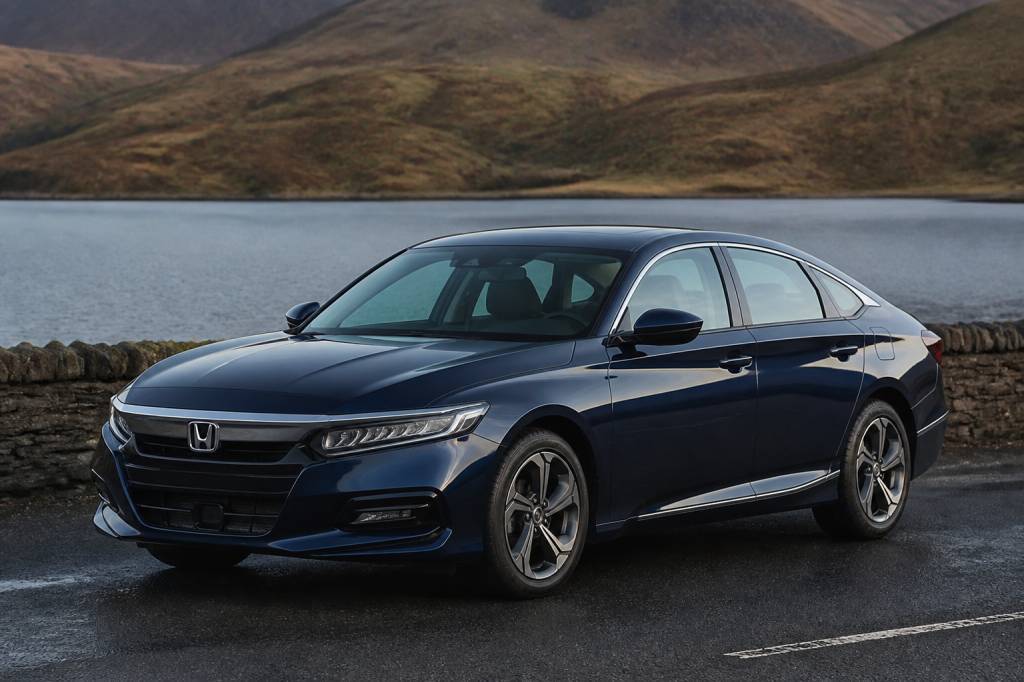
The Honda Accord has always occupied an appealing middle ground: more refined than a basic family saloon, less ostentatious than a premium German executive car, and generally engineered with the sort of quiet competence Honda does so well. In the UK, however, buying one today requires a little more research than it once did. Honda stopped selling the Accord here in 2015, so every example on the market is now used, and newer-generation cars are typically imported.
That is not necessarily a problem. In fact, a well-maintained Accord can be an excellent value purchase. The important question is not simply whether the car looks good on a classified advert. It is whether the engine, gearbox, maintenance history, specification and finance arrangement make sense for your circumstances.
Which Honda Accord are you actually buying?
There are two broad categories to consider in the UK: cars originally supplied to the British market and imported vehicles from Japan or other countries.
The eighth-generation Accord, sold in the UK from roughly 2008 to 2015, is the most familiar option. It was available as a saloon and Tourer estate, with petrol and diesel engines. The range included the practical 2.0-litre i-VTEC petrol, the larger 2.4-litre petrol and Honda’s 2.2-litre i-DTEC diesel. Trim levels varied, but higher-spec cars could include leather upholstery, navigation, parking sensors and adaptive cruise control.
Japanese-market Accords are also common in the UK, particularly newer models that were never officially sold here. These may offer hybrid powertrains, advanced safety equipment and attractive styling, but they need closer scrutiny. Parts availability, insurance, vehicle history and speedometer configuration all deserve attention. A low purchase price can quickly look less impressive if a specialist repair is required.
Before viewing a car, check its registration details through the DVLA and obtain an independent history report. Confirm the date of first registration, engine size, fuel type, import status and MOT record. An advert describing a car as “UK supplied” when it is actually an import is not a minor technicality; it can affect finance, insurance and resale value.
Choosing the right engine
For many private buyers, the 2.0-litre petrol is the safest all-round choice. It is smoother and mechanically simpler than the diesel, making it particularly attractive for drivers covering modest annual mileage or using the car mainly for short journeys. Fuel economy will not match a modern hybrid, but reliability and predictable maintenance have their own value.
The 2.4-litre petrol provides stronger performance and suits long-distance driving well. It is refined, willing and pleasantly understated, although fuel consumption, insurance premiums and road tax can be higher. If you enjoy a relaxed motorway car and can accept the running costs, it remains an appealing option.
The 2.2-litre i-DTEC diesel is better suited to drivers who regularly cover motorway miles. It offers useful torque and can return respectable economy when properly maintained. Short urban journeys, however, are not its natural habitat. Diesel particulate filter issues, exhaust-system faults and neglected servicing can turn an apparently economical car into an expensive project.
Hybrid Accords are usually imports rather than UK-market cars. They may deliver impressive refinement and lower urban fuel consumption, but the battery condition is critical. Ask for evidence of battery checks, inspect the hybrid warning system and use a garage familiar with the specific model. “Hybrid” is not a guarantee of low ownership costs if the battery pack or specialist electronics are approaching the end of their useful life.
- 2.0 petrol: the sensible choice for mixed use and lower mechanical complexity.
- 2.4 petrol: smoother and faster, but more expensive to fuel and tax.
- 2.2 diesel: suitable for high-mileage motorway drivers with a strong service history.
- Hybrid import: efficient and modern, but dependent on specialist checks and battery health.
Manual or automatic?
The Accord’s manual gearboxes are generally durable when serviced and driven correctly. During a test drive, pay attention to clutch bite, clutch slip under acceleration and any difficulty selecting gears when the car is cold. A heavy clutch may indicate wear, while a high biting point suggests that replacement could be approaching.
Automatic versions can be comfortable companions, especially in traffic, but they should not be treated as maintenance-free. Gear changes should be smooth and consistent, without flaring engine speed, hesitation or harsh engagement. Ask whether the transmission fluid has been changed at the recommended intervals. A seller who says, “It’s sealed for life,” may be repeating a common myth rather than describing a sensible maintenance plan.
On imported cars, identify the exact transmission type and confirm that parts and servicing support are available in your area. A Honda specialist can often provide better advice than a general used-car outlet, particularly where a hybrid or non-UK specification is involved.
What to inspect before buying
A clean body and a freshly valeted interior are useful, but neither tells you much about mechanical condition. Take your time and inspect the Accord in daylight, preferably when the engine is cold.
- Check the body panels for mismatched paint, uneven gaps and signs of accident repair.
- Inspect the underside for corrosion, damaged covers and oil or coolant leaks.
- Look at the tyres. Uneven wear can indicate suspension, tracking or alignment problems.
- Test every electrical item, including air conditioning, electric seats, windows, parking sensors and the infotainment system.
- Check that all dashboard warning lights illuminate at start-up and then go out as expected.
- Listen for knocking over speed bumps and rough roads, which may point to worn suspension components.
- On diesel models, watch for excessive smoke, poor acceleration or warning messages linked to the DPF and emissions system.
- Examine the service book and invoices rather than relying on a verbal promise of “full history”.
During the test drive, allow enough time for the car to reach operating temperature. A vehicle that feels perfect for five minutes may behave very differently once warm. Try town driving, a faster road and a firm braking test in a safe location. The Accord should track straight, brake evenly and feel composed rather than vague.
Pay particular attention to rust around wheel arches, sills, door edges and the tailgate of Tourer models. Older cars may also suffer from worn suspension bushes, tired air-conditioning components and ageing infotainment systems. None of these faults automatically makes the car a bad purchase, but they should be reflected in the price.
Running costs in the UK
Purchase price is only one part of the ownership calculation. Vehicle Excise Duty depends on the car’s registration date, emissions band and engine specification. Older petrol and diesel Accords can attract substantial annual tax, while some newer imports may fall under different taxation rules. Always check the exact registration number on the official government vehicle tax service rather than relying on a seller’s estimate.
Fuel costs are equally important. A 2.0-litre petrol Accord may be dependable and pleasant, but it will not deliver the economy of a contemporary small hatchback. The 2.4-litre model can be particularly thirsty in town. Diesel makes more sense for high annual mileage, provided the car spends enough time at sustained speeds for its emissions equipment to function properly.
Insurance can vary sharply between apparently similar examples. Imported models, larger engines, automatic gearboxes and higher trim levels may all increase premiums. Obtain quotations before committing to a purchase. It is frustrating to negotiate a brilliant price and then discover that insuring the car costs more than expected.
Urban restrictions should also be part of the calculation. London’s Ultra Low Emission Zone covers most areas within the North and South Circular roads, and other UK cities operate or are considering clean-air schemes. Check the exact emissions status of any Accord you are considering. A diesel that is affordable to buy may become inconvenient or costly if your regular journeys pass through charging zones.
How to finance a used Honda Accord
Because the Accord is no longer a current UK-market model, finance options can be less straightforward than they are for a newer Civic or CR-V. Some mainstream lenders will finance older vehicles, while others impose age or mileage limits. Imported cars may have fewer available products, and certain lenders may decline vehicles without a conventional UK registration history.
Hire Purchase, or HP, is often the simplest structure for an older used car. You pay a deposit followed by fixed monthly instalments over an agreed term. Once the final payment and any arrangement fee have been paid, ownership transfers to you. HP is easy to understand and can suit buyers who intend to keep the Accord for several years.
Personal Contract Purchase, or PCP, may be available through some dealers, although it is less common for older or imported vehicles. PCP generally involves lower monthly payments because part of the car’s expected future value is deferred as a final optional payment. At the end of the agreement, you can pay the balloon payment, return the vehicle subject to mileage and condition rules, or use any equity towards another car.
For an older Accord, PCP deserves careful consideration. If the vehicle’s future value is difficult to predict, the final payment may look optimistic or the interest rate may be less competitive. You should also check mileage limits closely. A family estate used for long-distance work can quickly exceed an apparently generous annual allowance.
A personal loan from a bank or building society is another route. It may provide flexibility and, depending on your credit profile, a competitive rate. However, the lender usually does not secure the vehicle in the same way as HP, so you remain responsible for making the repayments even if the car develops a serious fault.
Comparing finance offers properly
Do not compare monthly payments alone. A low monthly figure may simply reflect a larger deposit, a longer term or a substantial final payment. Compare the total amount payable, annual percentage rate, fees, deposit, mileage conditions and ownership position.
- Deposit: confirm how much you pay at the start and whether it is refundable.
- Monthly payment: ensure it fits comfortably within your budget, not just during an average month.
- APR: compare the representative rate with the personalised rate actually offered to you.
- Total amount payable: this is the clearest measure of the finance cost.
- Agreement term: a longer term reduces monthly payments but increases total interest.
- Final payment: understand whether a balloon payment applies and how it affects ownership.
- Early settlement: check the process if you want to clear the finance before the end date.
Set a realistic ownership budget before visiting a dealer. Include fuel, insurance, tax, servicing, tyres, MOT testing and a reserve for unexpected repairs. With an older executive saloon, keeping several hundred pounds available for maintenance is not pessimism; it is sensible planning.
Questions to ask the seller
A good seller should be able to answer direct questions without becoming defensive. Ask how long they have owned the car, why it is being sold, where it has been serviced and whether it has outstanding finance. If buying privately, use a reputable vehicle history service and make sure the name and address on the paperwork match the seller’s identity.
For a dealer-supplied car, ask what preparation has been completed, whether the vehicle comes with a warranty and what that warranty actually covers. “Three months’ warranty” sounds reassuring until you discover that consequential damage, diagnostics and wear items are excluded.
Check the MOT history for repeated advisories. One advisory for a worn tyre is not alarming; a pattern of corrosion, suspension wear or brake imbalance over several years tells a more useful story. Maintenance history is rarely glamorous, but it is often where the real value lies.
Is a Honda Accord right for you?
The Accord makes sense for buyers who value comfort, solid road manners and understated quality more than having the latest dashboard technology. It is particularly attractive as a long-distance car or practical family estate. The cabin is generally spacious, the driving position is comfortable and the chassis remains more engaging than many ordinary family cars.
It is less suitable for drivers who need the lowest possible urban running costs, want easy access to every manufacturer dealer or expect modern smartphone integration without modification. Imported versions can be excellent, but they demand more homework. The best Accord is not necessarily the newest or cheapest example; it is the one with transparent history, sensible specification and a finance package that does not strain your monthly budget.
Approach the purchase methodically, arrange an independent inspection where possible and compare the full cost of ownership rather than the advert price. Do that, and the Honda Accord can still be a quietly convincing UK used-car choice: comfortable, capable and refreshingly free of unnecessary drama.