
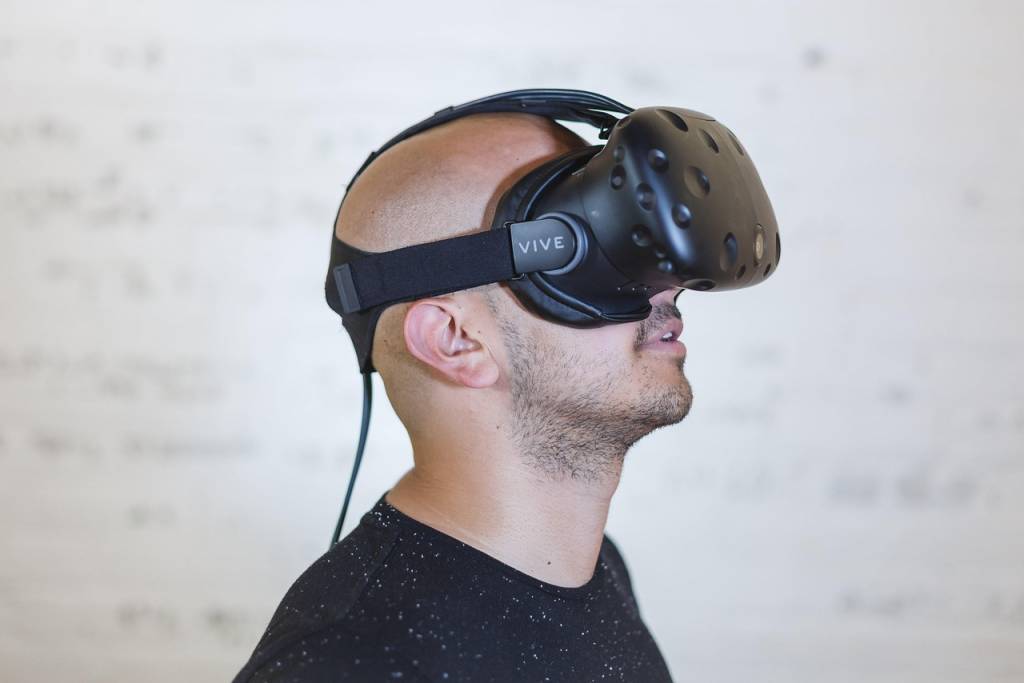
Reimagining Product Design: How VR is Revolutionizing CAD Software
Virtual reality (VR) is no longer a novelty in video games or entertainment—it has entered the world of industrial engineering and is changing how products are designed, evaluated, and brought to life. Traditional CAD software, with its reliance on 2D monitors and static 3D viewports, faces growing limitations in the era of complex design ecosystems. As product development cycles accelerate and the demand for real-time, collaborative engineering grows, VR stands as a transformative technological force reshaping Computer-Aided Design (CAD) workflows.
A notable advancement in this domain is Skyreal VR, a sophisticated VR CAD platform developed by SKYREAL. Tailored for industrial sectors like aerospace, automotive, energy, and maritime, it enables engineers to break free from screen-bound design validation processes and engage with fully immersive digital prototypes at a 1:1 scale. This ability to manipulate, explore, and optimize industrial designs in real-world proportions changes both how products are engineered and how decisions are made at every stage of the product lifecycle.
Why Traditional CAD is No Longer Enough
Industrial design is increasingly collaborative, complex, and constrained by tight production timelines. Yet, much of the engineering toolkit is still anchored to two-dimensional screens, requiring professionals to interpret 3D geometries using mental reconstruction and static viewpoints. This workflow is inherently inefficient and prone to error.
Some of the key challenges engineers face with legacy CAD tools include:
- Data Translation Limitations: Converting intricate assemblies, often with millions of geometric entities, into formats suitable for web sharing or simulation causes loss of information and performance bottlenecks.
- Collaboration Gaps: Infrequent and sequential design reviews prevent real-time, multi-stakeholder collaboration. This often delays crucial validation steps.
- Disconnect from Manufacturing: Without a way to virtually 'walk through' assemblies or processes, issues like tool inaccessibility or ergonomic faults are often caught late in physical prototyping stages.
- Lack of Spatial Context: CAD models viewed on 2D screens lack the physicality and proportion of the real world, making it hard for teams to assess whether designs are viable or ergonomic.
VR CAD software, particularly solutions like Skyreal VR, overcomes these constraints by enabling direct interaction with CAD models in a real-time, immersive environment.
How Skyreal VR Bridges the CAD-VR Divide
Skyreal VR is purpose-built to merge CAD and VR into a seamless workflow—not by compromising on geometric fidelity or metadata integrity, but by enhancing it through a real-time, photorealistic simulation environment. Users can import native CAD data complete with hierarchies and constraints into a collaborative VR space where teams from across the globe can examine assemblies, test ergonomics, and simulate production scenarios together.
The Unreal Engine 5 Advantage
At the heart of Skyreal VR is Unreal Engine 5, the industry-leading real-time 3D engine. Leveraging features like Screen Space Ambient Occlusion (SSAO), Temporal Super-Resolution Anti-Aliasing (TSAA), and dynamic shadowing, Skyreal VR transforms static CAD models into stunning, immersive digital twins without reducing geometry fidelity.
This foundation allows the rendering of massive assemblies while maintaining fluidity and realism—enabling engineers, architects, and production managers to experience the full scope of their designs at life-size scale and precise visual detail.
A Seamless CAD to VR Pipeline
Skyreal’s proprietary suite introduces a high-fidelity pipeline from leading CAD platforms to VR. This bidirectional pathway preserves all vital design semantics—parametric details, kinematic constraints, and multilevel assemblies—when transitioning models from CAD software to VR sessions.
This ensures data consistency and allows engineers to modify and validate models directly within immersive environments using precise, production-accurate inputs.
Technical Innovations Powering Immersive Engineering
Remote Control and System Integration
The embedded RESTful API framework enables external applications to integrate and control VR sessions dynamically. This vast interoperability unlocks new opportunities across engineering IT systems, such as PLM integration, real-time collaboration dashboards, and manufacturing execution systems.
Advanced Physics Engine for Realistic Validation
Skyreal VR features the integrated XDE (eXtended Dynamics Environment) module, incorporating multi-physics simulations directly into the VR workspace. Engineers can simulate joint articulation, collision detection, and stress distribution without exporting files to separate simulation software.
This real-time interactivity bridges the traditional simulation-validation gap. Users can, for example, validate product assembly sequences, test maintainability scenarios, or explore the biomechanics of human interaction with equipment—all using real CAD models inside virtual workshops.
From Theory to Action: VR CAD in Industrial Use Cases
Collaborative Design Engineering
In product development, seconds count—and miscommunication can cost millions. Skyreal VR empowers distributed engineering teams to conduct real-time, immersive design reviews regardless of location. Using accurate product geometry and lifelike visualization, stakeholders can:
- Concurrently evaluate design alternatives in a shared virtual workspace
- Perform architecture trade-off studies in real-time
- Assess design changes and their system-wide impacts instantly
This capability alone can reduce product design cycles by 30%, eliminating the interpretation uncertainty posed by 2D screens or delayed review schedules.
To explore this solution further, discover the possibilities of vr cad software that’s transforming complex engineering workflows into intuitive, immersive experiences.
Optimizing Manufacturing Readiness
Manufacturing engineering benefits significantly from VR-enhanced CAD environments. By simulating operation and production scenarios early in development, teams can:
- Validate production processes and perform Failure Mode and Effect Analysis (FMEA)
- Design assembly jigs and fixtures with ergonomic assessments in real-time
- Analyze human factors and MSD risks in digitally recreated workspaces
This "digital-first" approach enables zero-defect ramp-up by anticipating production faults before physical parts or tooling are built—helping enterprises adopt a “build-right-first-time” philosophy.
Assuring Operational Excellence in Industry 4.0
Integrating VR with CAD unlocks unprecedented value in post-production phases of the product lifecycle:
- Technicians and operators receive immersive training in VR simulations modeled from CAD
- Digital twins integrated with real-world sensor data provide predictive maintenance insights
- Remote support can overlay step-by-step instructions on full-scale CAD-based virtual assets
These capabilities support a safer, more efficient operational landscape—exactly what Industry 4.0 demands from smart manufacturing systems.
Quantifiable Return on Investment
Skyreal VR stands out not only for its technical proficiency but for the substantial ROI it delivers. By adopting VR CAD workflows, enterprises report:
- 30% faster design validation and review cycles
- Significantly improved inter-team collaboration, regardless of geographic barriers
- Fewer physical prototypes thanks to thorough validation in digital twins
- Expanded capacity for exploring design variants without time or resource constraints
- Improved training effectiveness across engineering, production, and service roles
Many of these gains stem from replacing interpretation and assumption with direct, immersive comprehension—users no longer guess how a system fits together; they walk through it, interact with it, and assess its behavior in real time, even before it exists physically.
Pathway to Implementation
Transitioning from a traditional CAD system to a VR-enhanced environment doesn’t have to be disruptive. SKYREAL supports organizations through every stage, from infrastructure assessments and technical consultation to integrated deployments and user training programs. Their tailored onboarding ensures that Skyreal VR complements and elevates existing engineering workflows rather than replacing them outright.
This approach has led new adopters to quickly realize the value of immersive engineering, from initial prototyping to final user training, with minimal friction and maximum impact.
As engineering challenges grow in complexity, and as interdisciplinary collaboration becomes non-negotiable, VR emerges as the natural progression of the design process. And with platforms like Skyreal VR, the future of CAD is not just digital—it’s immersive.